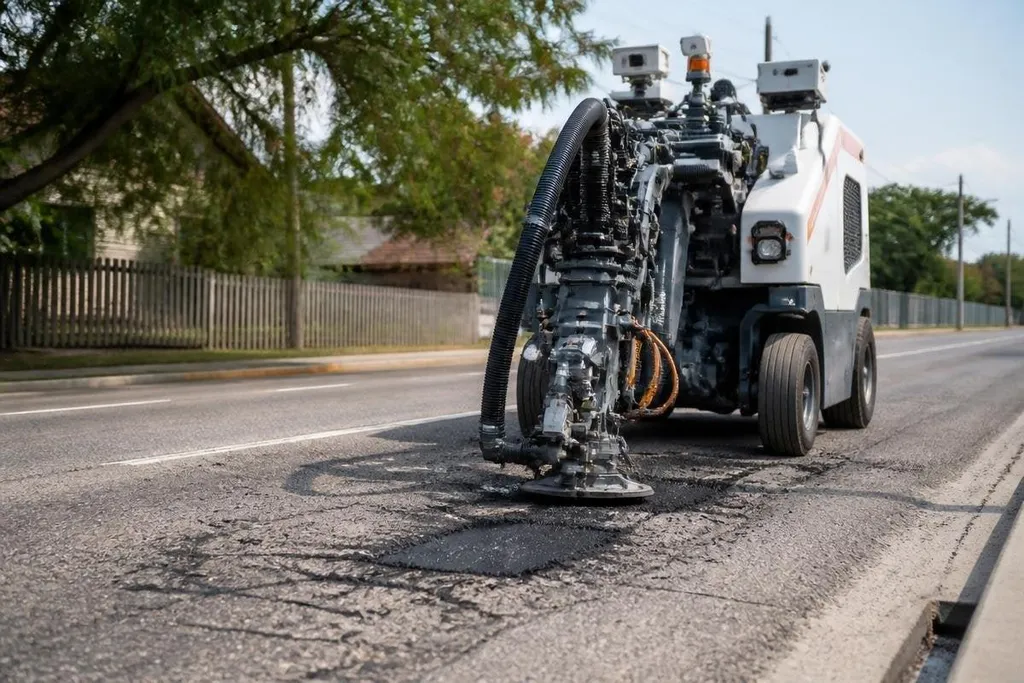
A pothole repair robot would need to find damaged road, measure it, fill it, and leave a safe surface behind. That sounds like a short job, but each step affects the next one, especially when traffic, rain, and loose asphalt enter the picture.
- A camera and LiDAR could map damage before a crew starts work.
- A robotic tool could cut, clean, fill, and press the repair area.
- Human approval would still matter for road safety and final quality.
Finding the damage
The first useful task is inspection. A vehicle could carry cameras and LiDAR, which uses laser pulses to measure shape and distance. As it drives, software could mark holes, cracks, raised edges, and patches that have started to fail.
That map would give a road crew a work list instead of a long drive through streets looking for damage. It could also show whether a repair needs a small surface patch or a deeper cut into the road.
The robot would need to handle poor conditions. Water can hide the bottom of a hole, dirt can cover broken edges, and shadows can make a shallow defect look deeper. A system that measures only from one camera angle would miss some of that information.
Preparing the repair
A machine can't make a lasting patch by dropping material into loose rubble. It would first need to remove weak asphalt around the hole, clear dust and water, then check that the remaining edges can hold new material.
That work could use a small cutting wheel, a vacuum, an air nozzle, or a mechanical brush. The exact tool would depend on the repair method and the road surface. A robot arm could carry the tool, while a mobile base would position it over the damaged area.
The shape of the cut matters. A clean edge gives the new material a better boundary, while an uneven edge can leave gaps where water enters. Those gaps are one reason a patch can fail before the surrounding road does.
Filling and pressing the patch
After preparation, the robot would place repair material in controlled amounts. It might use hot asphalt, a cold mix, or another material chosen for the road and weather.
The machine would need to spread the fill across the hole rather than leave a mound in the middle. Compaction is the next test. A roller or vibrating plate would press the material into place, and sensors could check the repaired surface height.
If the patch sits too low, water may collect there. If it sits too high, passing vehicles will strike the edge.
A repair robot would also need to work around traffic. That may mean operating from a protected vehicle, using cones and signs, or stopping while a person checks the area. The robot's arm is only one part of the job; the work zone matters just as much.
A patched road still needs a person to check its depth, edge, and bond with the old surface. Road-maintenance robot reports from Robot24.com can tie those checks to a named machine, repair method, road, and test result before you weigh where the plan can fail.
Where the idea can fail
Potholes are different from one another. A shallow break in a dry lane is an easier job than a deep hole filled with water beside moving traffic. A system built for one repair size may need a person to take over when the road falls outside its working range.
Weather adds another limit. Asphalt temperature, rain, and surface moisture affect how repair material behaves. A robot could measure those conditions, but measurement doesn't remove the need for a suitable repair method.
The repair also needs a record. A useful system would store the location, size, material, and time of each job. That information could help a road team check failed patches and decide when a street needs larger work instead.
I'd support robots first as inspection and repair tools under human control, not as unattended road crews. The safety case is easier to check when a person can stop the machine and inspect the patch before traffic returns.
A practical test for a road agency
Before buying a system, check these points:
- Map the defect: Require a clear image and measured depth for each repair area.
- Prepare the edges: Confirm that the machine removes loose material instead of covering it.
- Match the fill: Record which repair material works with each road and weather condition.
- Check the surface: Measure the patch height after compaction.
- Stop safely: Test the emergency stop, traffic controls, and handoff to a road worker.
- Track the result: Revisit repaired areas and compare failures with the original records.
The first useful deployment would probably be a slow, supervised system that marks damage and handles repeatable repairs in a protected lane. If it can leave a level patch, keep people clear of the work area, and show which repairs hold up, road agencies will have a basis for wider use.